
TIRCIA · E-book · English
Supporting a loved one after trauma
being there, and caring for yourself
When someone we love goes through a traumatic event, we often wonder what to say and how to help. This guide for families and friends explains common reactions after trauma, what helps day to day, how to encourage seeking support and how to protect your own energy.
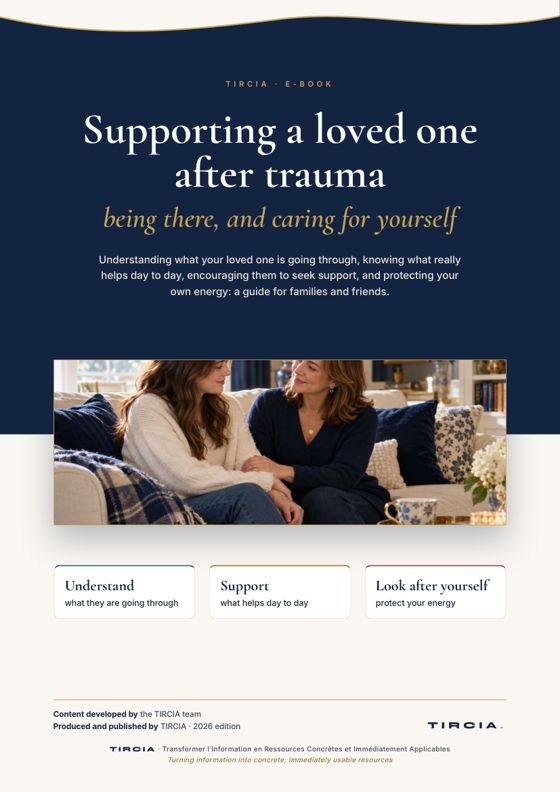
01 · Who it is for
For partners, families and friends who want to help without getting it wrong
For anyone close to a person who has been through a traumatic event: a partner, a parent, a grown-up child, a friend. Support from those around them is one of the strongest protective factors, and your presence matters.
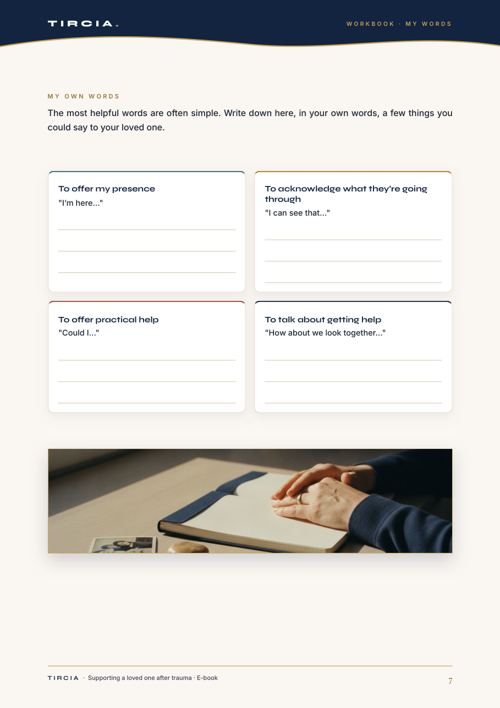
It brings simple pointers drawn from research and clinical practice, words to try, a support plan and a page on urgent situations. Therapists can hand it to the families of the people they accompany.
02 · Inside the e-book
Eight short chapters, to walk alongside them
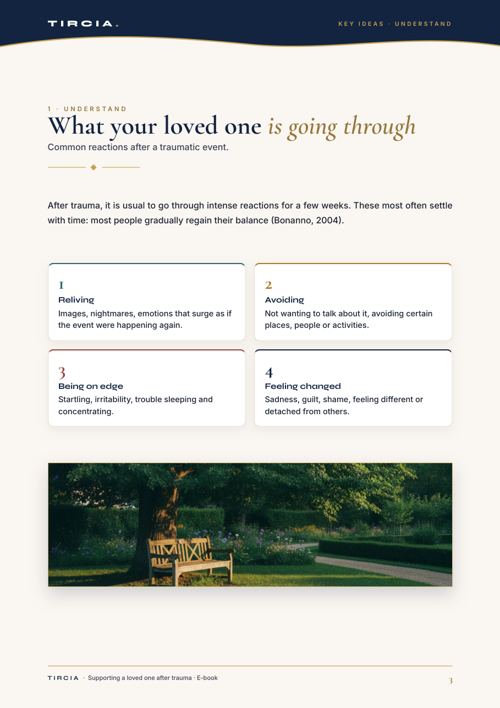
What your loved one is going through
Common reactions after trauma, and how they can affect the relationship.
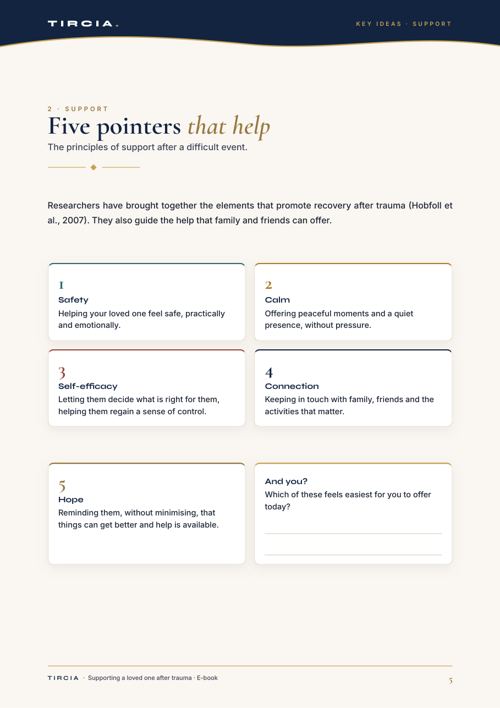
Five pointers that help
Safety, calm, self-efficacy, connection and hope, in everyday terms.
Being there, without pushing
Listening that respects their pace, and space to find your own words.
Practical help
Simple gestures that make daily life lighter.
When to seek help
How to raise the subject gently, and respect their decision.
What about the children?
Simple explanations and routines that help children feel secure.
Protecting your energy
Signals to listen to, what recharges you, and your support plan.
When to worry
The warning signs that call for action straight away, and what you can do.
03 · A look inside
Clear, airy pages, made to be read slowly
Good to know
This guide offers bearings and goes alongside the care of a doctor or therapist. If your loved one is in danger or having thoughts of suicide, call your local emergency number (112 in Europe, 999 UK, 911 US). UK Samaritans 116 123 and the US 988 Suicide & Crisis Lifeline also support worried family and friends.
Be there at your own pace, and look after yourself too
Also available in French: Accompagner un proche après un trauma
Editorial direction: Marie-Agnès ThulliezTIRCIA
Turning information into concrete, immediately usable resources