
TIRCIA · E-book · English
Sleep after trauma
understanding difficult nights and finding support
After a difficult event, many people sleep less well: long nights, waking up, nightmares. This workbook explains why, and offers evidence-based guidance and exercises to do at home to settle your nights and soothe recurring nightmares.
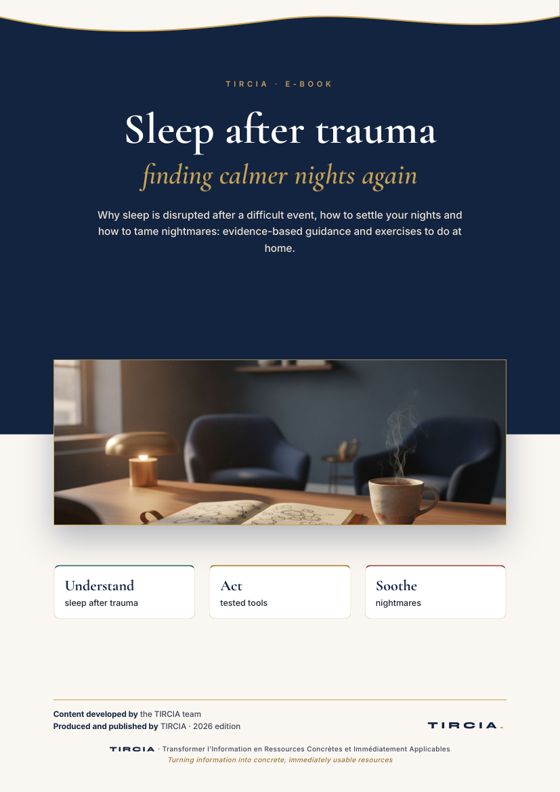
01 · Who it is for
For anyone who lies awake long after the event
For people whose sleep has been disrupted since a traumatic or very stressful event, and for those close to them. Sleep problems after trauma are common, they can be explained, and they deserve care in their own right.
It brings a sleep diary, a wind-down routine, the principles of CBT for insomnia and imagery rehearsal for nightmares. You can bring it to your appointments, and doctors and therapists can hand it to their patients.
02 · Inside the e-book
Eight short chapters, to read at your own pace
Why sleep goes off track
An alarm system that struggles to switch to standby, and how insomnia keeps itself going.
My sleep diary
One to two weeks of notes to spot your patterns.
Habits that support sleep
Simple routines for the day and the evening, to help the body find its rhythm.
Cognitive behavioural therapy for insomnia
The main ingredients of a recommended approach, and your wind-down routine.
Imagery rehearsal therapy
Rewriting the ending of a recurring nightmare, in four steps.
After a difficult waking
Coming back to the present, then letting sleep return.
When to seek advice
The signs that call for a doctor, and a word on medication.
My sleep plan
Three small changes to start with, and questions for your appointment.
03 · A look inside
Clear, airy pages, made to be read slowly
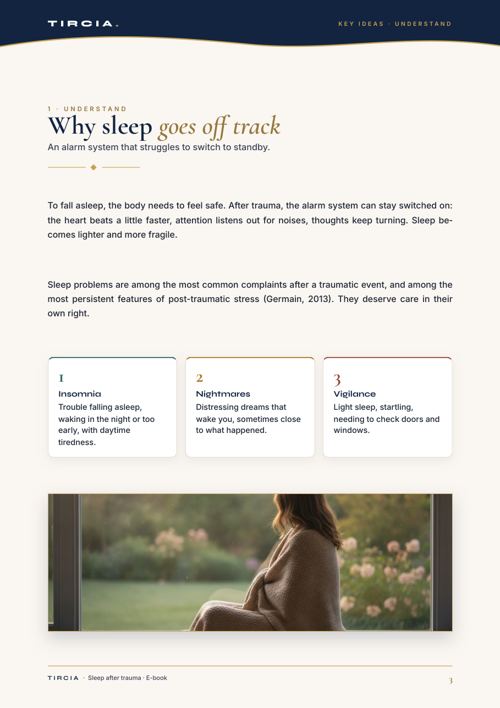
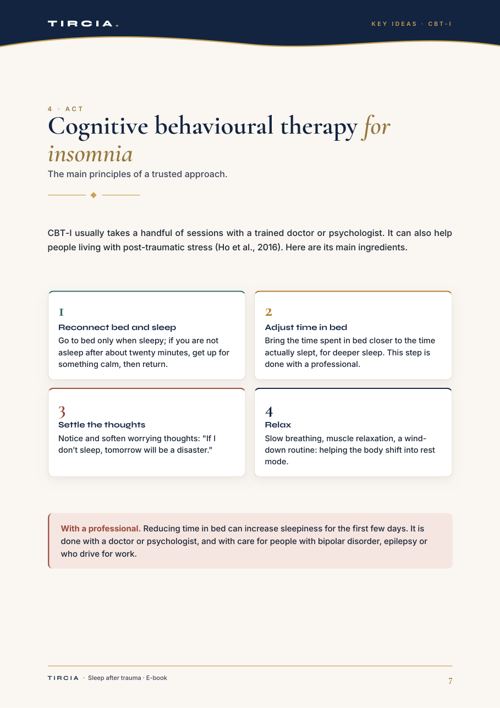
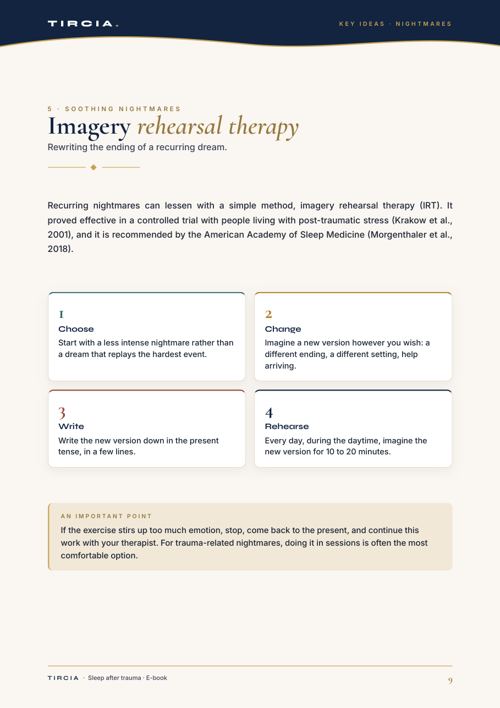
Good to know
This workbook offers bearings and goes alongside the care of your doctor or a psychologist. If your nights come with thoughts of ending your life, or if tiredness becomes dangerous, speak to a doctor without delay. In a crisis, call your local emergency number (112 in Europe, 999 UK, 911 US); UK Samaritans 116 123; US 988 Suicide & Crisis Lifeline.
One night at a time, keep it by your bed
Also available in French: Dormir après un trauma
Editorial direction: Marie-Agnès ThulliezTIRCIA
Turning information into concrete, immediately usable resources