
TIRCIA · E-book · English
Panic attacks
understanding the wave and learning to calm the body
A panic attack is intense and frightening, and very common. This workbook explains what happens in the body, why the sensations are unpleasant without being dangerous, and offers tools from cognitive behavioural therapy to get through the wave and return, step by step, to what fear has pushed aside.
01 · Who it is for
For anyone who dreads the next wave
For people who have had one or more panic attacks, who live in fear of the next one, or who have started avoiding places and activities. It is best used once a medical check-up has ruled out other causes.
It brings a panic diary, a pocket card, a worksheet on catastrophic thoughts and a ladder of situations. You can use it on your own or with a professional, and therapists can hand it to their clients.
02 · Inside the e-book
Nine short chapters, one step at a time
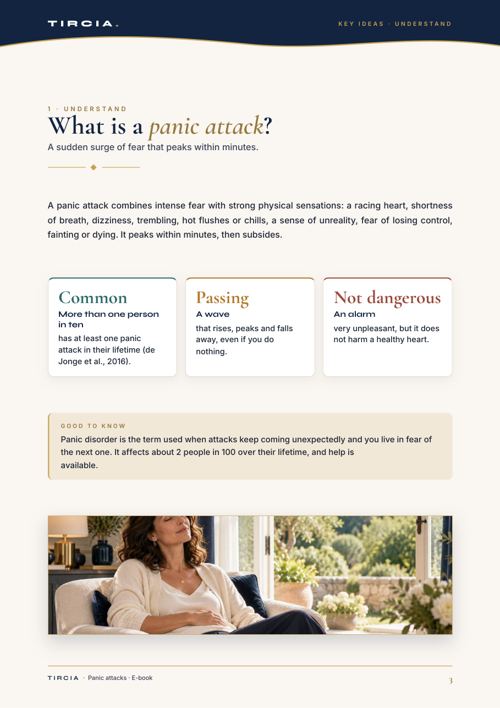
What is a panic attack?
A sudden surge of fear that peaks within minutes, then subsides.
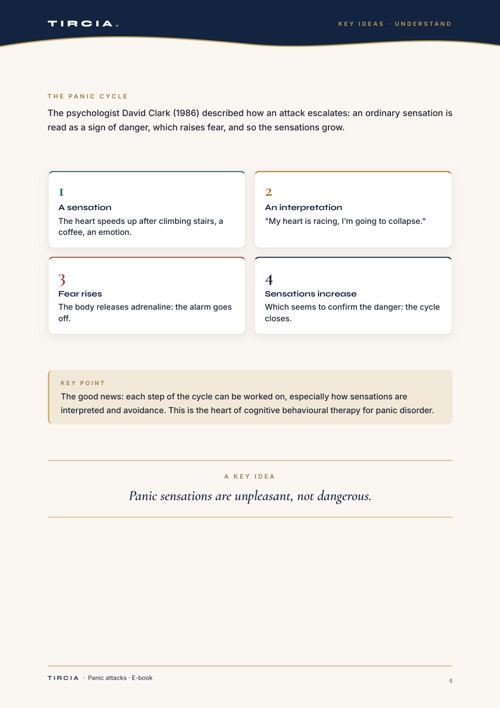
The panic cycle
How an ordinary sensation can escalate into an attack, after David Clark.
My panic diary
Note each attack in a few words to spot your own patterns.
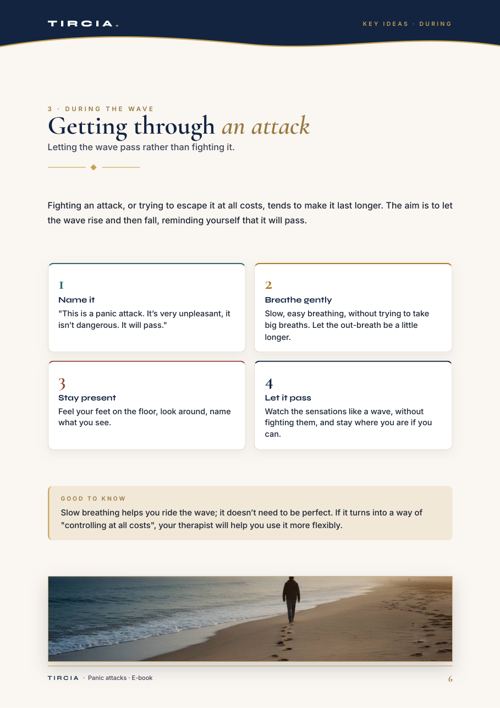
Getting through an attack
Four steps to let the wave rise and fall, and your pocket card.
Loosening catastrophic thoughts
Treat the thought as a hypothesis, and look at the evidence.
What brings relief, and what keeps it going
Avoidance and safety behaviours, and what they cost over time.
Interoceptive exposure
Bringing on sensations on purpose, safely, so they frighten you less.
My ladder of situations
From easiest to hardest, to reclaim what you avoid at your own pace.
Getting help
Approaches recognised by research, and when to talk to a professional.
03 · A look inside
Clear, airy pages, made to be read slowly
Good to know
This workbook offers bearings and goes alongside the care of a doctor or therapist; after the first attacks, a medical check-up is useful. Chest pain, feeling faint, unusual breathing difficulty: call your local emergency number (112 in Europe, 999 UK, 911 US). If you have thoughts of ending your life: UK Samaritans 116 123; US 988 Suicide & Crisis Lifeline.
Take it one step at a time, and keep it close
Also available in French: Les attaques de panique
Editorial direction: Marie-Agnès ThulliezTIRCIA
Turning information into concrete, immediately usable resources