
TIRCIA · E-book · English
Always guilty?
easing guilt that weighs too much
Some people feel guilty for saying no, for being tired, sometimes simply for taking up space. This e-book explains what guilt is for, how to recognise when it weighs too much, and offers exercises to bring it back to a fairer size, with kindness.
01 · Who it is for
For anyone who says “I was born guilty”
For people who feel responsible for everything, who blame themselves after a difficult event, or who carry an old background feeling of being in the way. It helps you tell proportionate guilt from guilt that has grown too heavy.
It brings clear landmarks and worksheets: revisiting an event, the responsibility pie, a kind letter, a guilt journal. Your notes can support work with a therapist, and therapists can hand it to their clients.
02 · Inside the e-book
Nine short chapters, to find a fairer balance
An emotion with a purpose
What guilt is for, and how it differs from shame.
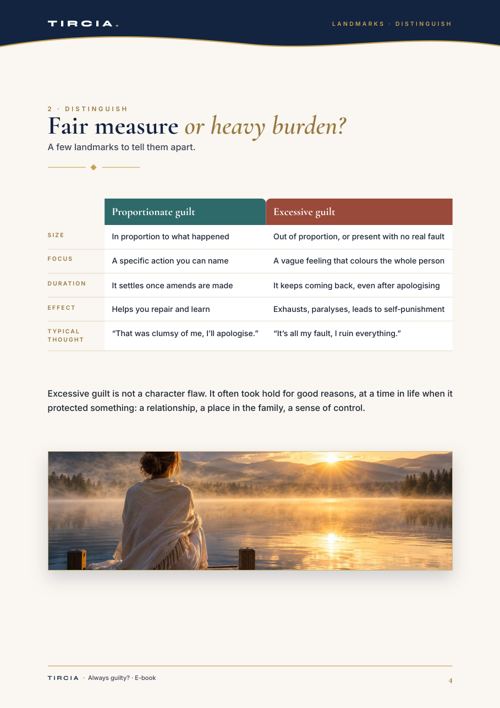
Fair measure or heavy burden?
Landmarks to tell proportionate guilt from excessive guilt.
The faces of excessive guilt
Guilty for existing, survivor guilt, guilt after trauma, responsible for everything.
“I was born guilty”
Where this background feeling can come from, often in childhood.
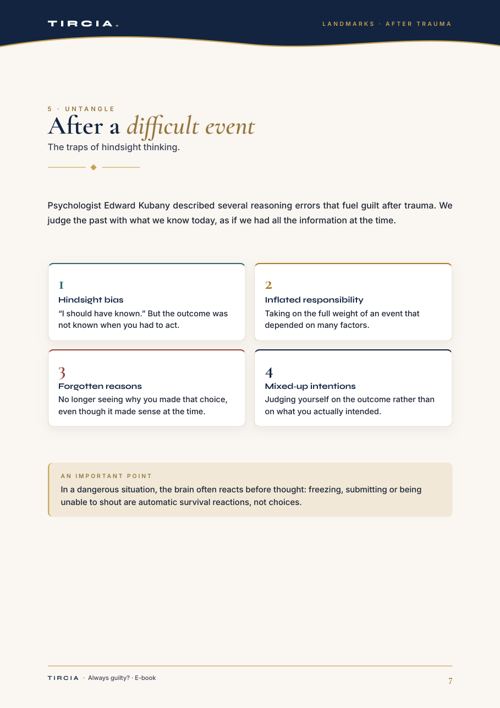
After a difficult event
The traps of hindsight thinking, and a worksheet to look at the event again.
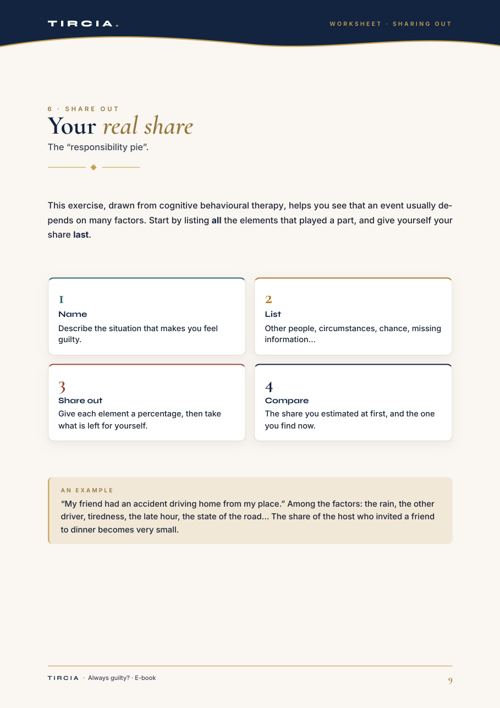
Your real share
The “responsibility pie”, step by step, with an example and a page to fill in.
Repair rather than punish yourself
Four steps for when guilt is justified: acknowledge, apologise, make amends, learn.
Kindness towards yourself
Self-compassion as an antidote to self-criticism, and a kind letter to write.
When to talk to a professional
The approaches that can help when guilt weighs on your life.
03 · A look inside
Clear, airy pages, made to be read slowly
Good to know
This e-book offers bearings and goes alongside the care of a doctor or therapist. If you are thinking about suicide, contact your local emergency number (112, 999, 911), Samaritans (UK) on 116 123 or 988 (US).
Go gently, at your own pace, and keep it close
Also available in French: Toujours coupable ?
Editorial direction: Marie-Agnès ThulliezTIRCIA
Turning information into concrete, immediately usable resources