
TIRCIA · E-book · English
Vicarious trauma
looking after yourself while you work with trauma
Listening, day after day, to accounts of violence or loss can leave its mark on the listener. This guide helps professionals recognise the signs of strain, take stock with a simple self-check and build a realistic prevention plan for their practice.

01 · Who it is for
For professionals who listen to other people’s trauma
For psychotherapists, psychologists, doctors, social workers, nurses and carers. These effects are well known and well researched, they can be lessened, and they are part of the job, just like supervision and training.
It brings clear definitions, a comparison table, a self-check, good session habits, questions for supervision and a prevention plan. Supervisors and team leaders can share it with their teams.
02 · Inside the e-book
Eight short chapters, to last the distance
Four related ideas
Vicarious trauma, secondary traumatic stress, compassion fatigue and burnout.
What sets them apart
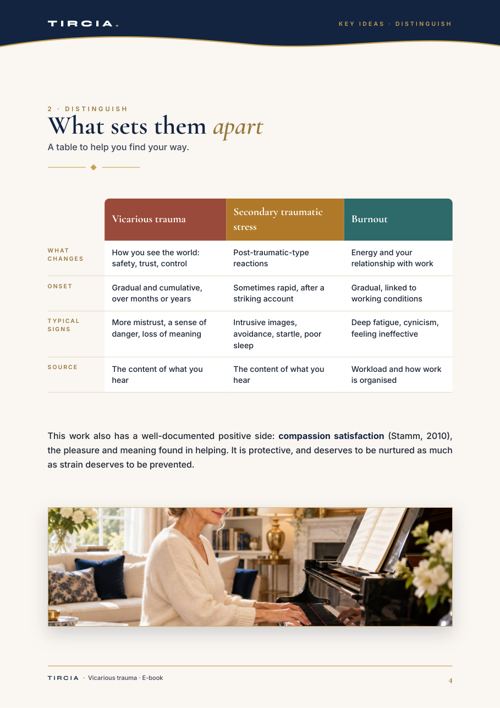
A table comparing onset, typical signs and source, and the role of compassion satisfaction.
Warning signs
In the body, emotions, worldview and practice, and what increases or lowers the risk.
My self-check
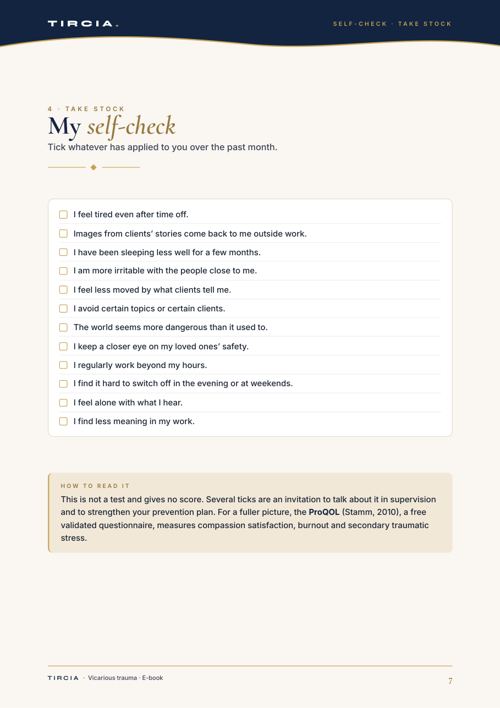
Twelve statements to tick, with no score, to take stock regularly.
Three levels of prevention
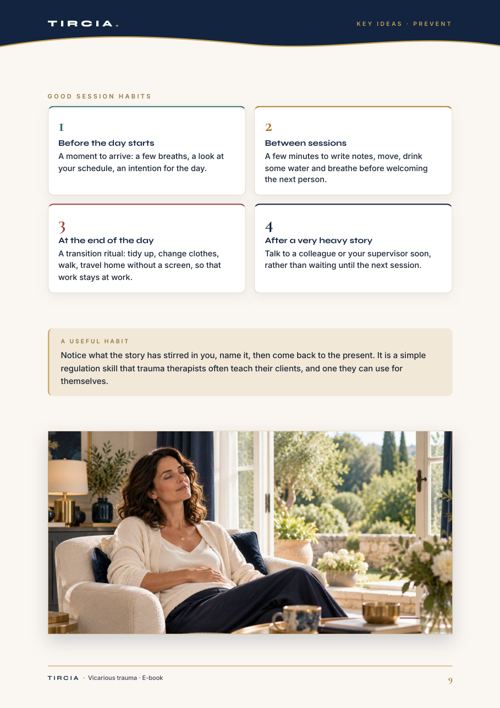
Yourself, your practice, your workplace, and good session habits.
Supervision, an essential support
Questions to bring to supervision or a peer group.
My prevention plan
A concrete, realistic plan to review every three months.
Keeping your love of this work
Compassion satisfaction and vicarious posttraumatic growth.
03 · A look inside
Clear, airy pages, made to be read slowly
Good to know
This guide offers bearings for personal reflection and goes alongside supervision and the care of a doctor or therapist. If you are having thoughts of suicide, call Samaritans on 116 123 (UK and Ireland) or 988 (US Suicide & Crisis Lifeline), any time. In an emergency, call your local emergency number (112 in Europe, 999 in the UK, 911 in the US).
Take a moment for yourself, and come back to it often
Also available in French: Le trauma vicariant
Editorial direction: Marie-Agnès ThulliezTIRCIA
Turning information into concrete, immediately usable resources