
TIRCIA · E-book · English
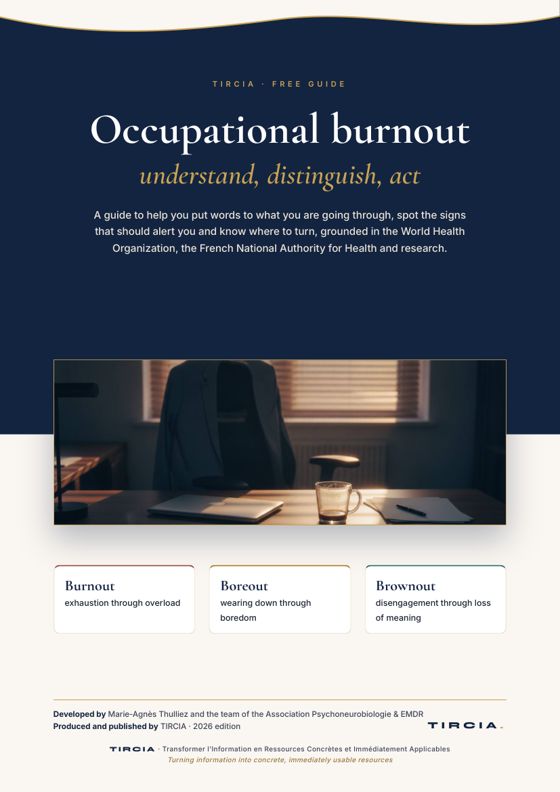
Occupational burnout
understand, distinguish, act
A free guide to help you put words to what you are going through at work, recognise the signs that deserve attention and know where to turn. It draws on the World Health Organization, the French National Authority for Health and research.
01 · Who it is for
For anyone who asks “is this more than tiredness?”
For anyone who feels worn down by work, and for managers who want to spot the signs early. The guide explains burnout as the WHO defines it, and the related ideas of boreout and brownout.
It offers questions to take stock, a weekly check-in and a page to prepare a talk with your doctor. Health professionals and occupational health teams can share it with the people they support.
02 · Inside the e-book
Seven short chapters, from words to action
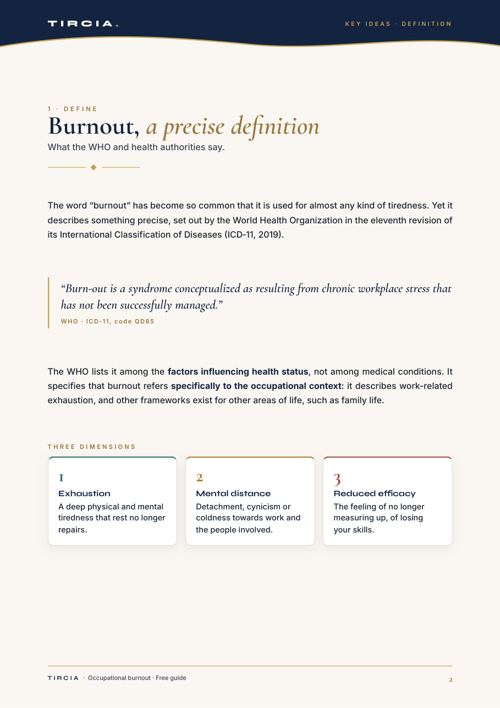
Burnout, a precise definition
What the WHO says, and the three dimensions: exhaustion, mental distance, reduced efficacy.
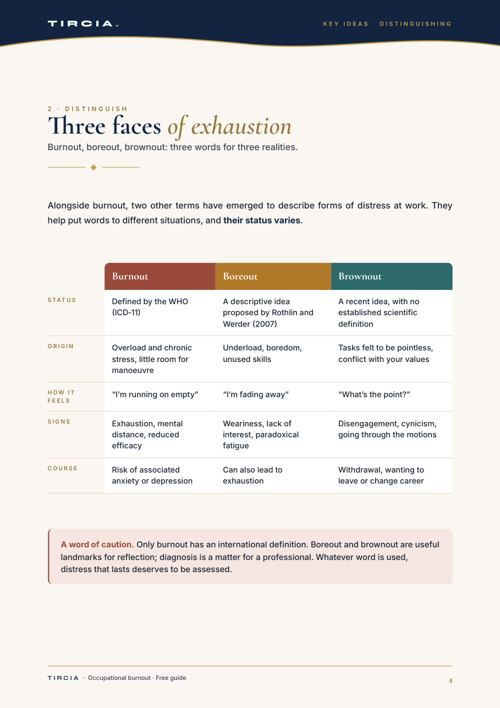
Three faces of exhaustion
Burnout, boreout and brownout compared: status, origin, signs and course.
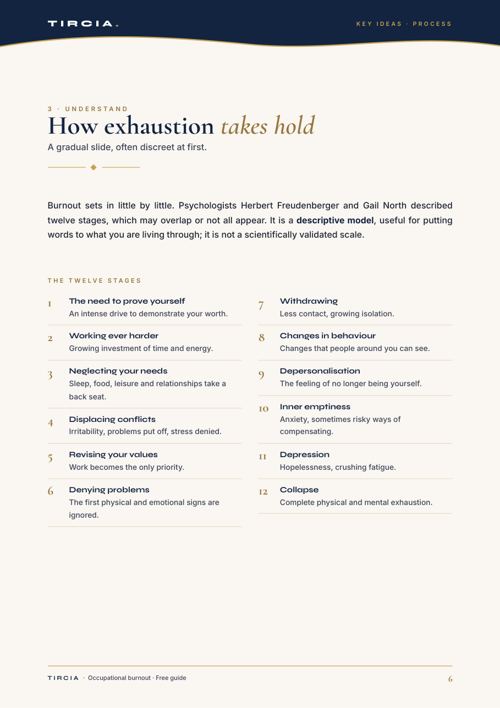
How exhaustion takes hold
The twelve stages described by Freudenberger and North, and why early signs are easy to miss.
Burnout or depression?
What the two share, what sets them apart, and why a doctor’s assessment matters.
Warning signs
The five types of signs described by the HAS, with questions to take stock.
My weekly check-in
A few minutes a week to follow your energy, sleep, mood and concentration.
Action, a shared responsibility
What the organisation can do, what you can do, and how to prepare to see your doctor.
03 · A look inside
Clear, airy pages, made to be read slowly
Good to know
This guide offers bearings and goes alongside the care of a doctor, an occupational health service or a therapist. If you have thoughts of suicide, seek help now: Samaritans 116 123 (UK and Ireland), 988 Suicide & Crisis Lifeline (US), or your local emergency number (112 in Europe, 999 in the UK, 911 in the US).
Take a few minutes for yourself, and keep it close
Editorial direction: Marie-Agnès ThulliezTIRCIA
Turning information into concrete, immediately usable resources