
TIRCIA · General public
Anxiety: understanding what happens in the body and in the mind
The brain, panic, automatic thoughts and breathing: what the research says

By Marie-Agnès Thulliez · Author · Publishing Director14-minute read
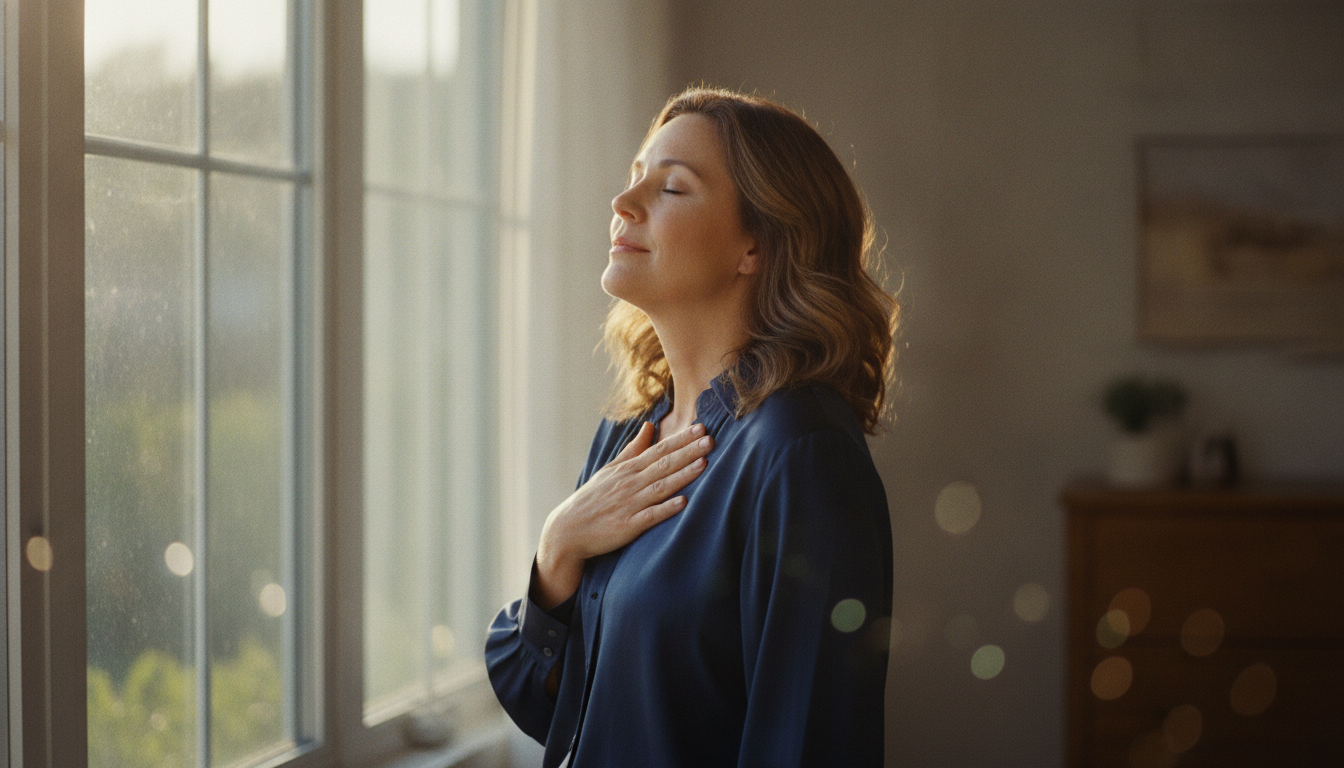
A racing heart, a tight throat, thoughts going round in circles: everyone knows anxiety. It is useful when it prepares us to face danger, but it can become overwhelming. Understanding what happens in the brain, in the body and in our thoughts helps us to see it differently, and to choose the tools that have proved their worth.
In brief
- Anxiety is a normal protective reaction; it becomes a problem when it is too frequent, too intense or out of proportion.
- A panic attack is very frightening, yet it is harmless in itself.
- The way we interpret sensations and situations keeps anxiety going: this is what cognitive behavioural therapies work on.
- Slow breathing helps us to calm down; when anxiety is a disorder, it is a useful companion to treatment.
1. A fast alarm system… and not always an accurate one
The neuroscientist Joseph LeDoux showed in animals that information about a danger can reach the amygdala, a small brain structure involved in detecting threats, via a very fast “low road”, even before it has been analysed in detail by the cortex (LeDoux, 1996). This is what makes us jump at a stick we mistake for a snake, before we realise our mistake.
This picture is useful, but it needs some nuance: in humans, researchers now think that emotional processing involves many interacting circuits, rather than a single “fast track” (Pessoa and Adolphs, 2010). LeDoux himself stresses that the conscious feeling of fear is more than the activity of the amygdala (LeDoux, 2015). The key point to remember: our alarm system favours speed over accuracy, and prefers to err on the side of caution.
2. Normal anxiety or anxiety disorder?
Ordinary anxiety is in proportion to the situation and fades along with it: nerves before an exam, worry before a medical appointment. We speak of an anxiety disorder when anxiety is excessive, lasts (often for several months), leads to avoidance and interferes with daily life. Anxiety disorders are the most common mental health conditions: according to large population surveys, up to one person in three will experience one during their lifetime (Bandelow and Michaelis, 2015).
| Disorder | What characterises it |
|---|---|
| Generalised anxiety | Excessive worries that are hard to control, about many subjects (health, work, loved ones), on most days. |
| Panic disorder | Repeated, unexpected panic attacks, and the fear of having another one. |
| Agoraphobia | Fear of situations from which it would be difficult to escape or to get help: public transport, crowds, queues. |
| Social anxiety | An intense fear of being judged or humiliated, which leads to avoiding social situations. |
| Specific phobias | An intense, targeted fear: animals, heights, blood, flying… |
Obsessive-compulsive disorder and post-traumatic stress disorder, long classed among the anxiety disorders, now form separate categories in the DSM-5 (American Psychiatric Association, 2013).
3. Panic attacks: frightening, yet harmless
A panic attack is a sudden surge of intense fear, accompanied by strong physical sensations: palpitations, tightness in the chest, a feeling of choking, dizziness, trembling, a sense of losing control or of dying. It peaks within a few minutes, then subsides.
Several mechanisms contribute to it. The sympathetic nervous system speeds up the heart and breathing. Breathing too fast (hyperventilation) lowers the level of carbon dioxide in the blood, which can cause tingling, dizziness or a feeling of choking. Yet hyperventilation explains only part of the picture: not every attack involves over-breathing.
The psychologist David Clark proposed a model that has profoundly shaped treatment: panic is maintained by a catastrophic interpretation of bodily sensations (Clark, 1986). The heart speeds up, the person thinks “I’m having a heart attack”, this thought increases the fear, which speeds up the heart even more. And so the vicious circle takes hold.
A word of caution
After a first attack, or if the symptoms differ from usual, it is important to see a doctor to rule out a physical cause, particularly a heart problem. If you have unusual chest pain, call your local emergency number (999 in the UK, 911 in North America, 112 in the EU).
4. Our thoughts are interpretations, not facts
“I’m going to fail this interview”, “Everyone could see how uncomfortable I was”. When we are anxious, these thoughts pop up automatically and seem obvious to us. Cognitive therapies regard them as interpretations, often skewed by what are known as cognitive distortions:
| Distortion | Example |
|---|---|
| Catastrophising | “If I stumble over my words, it will be a total humiliation.” |
| All-or-nothing thinking | “If it isn’t perfect, it’s a failure.” |
| Overgeneralisation | “I messed up this presentation; I always mess everything up.” |
| Mind reading | “They must think I’m incompetent.” |
| Personalisation | “If he’s in a bad mood, it’s because of me.” |
Cognitive behavioural therapies (CBT) teach people to spot these thoughts, to examine the evidence for and against them, and to try out other ways of seeing things. They also rely on gradual exposure to feared situations. A meta-analysis of placebo-controlled trials confirmed their effectiveness in anxiety disorders, with moderate effects (Carpenter et al., 2018).
5. Beneath a worry, a deeper fear
A technique from cognitive therapy, the “downward arrow”, helps us to understand what gives a worry so much weight (Burns, 1980). It involves asking yourself, several times over: “And if that were true, what would it mean for me?”
Example
- “I’m afraid I forgot to lock the door.”
- → “If I forgot, we could be burgled.”
- → “It would be my fault; I would have been careless.”
- → “I’m not someone who can be relied on.”
At the end of the chain, we often discover a core belief about ourselves (“I’m not reliable”, “I’m not good enough”) that gives the worry its intensity. This belief is what therapeutic work can focus on. A word of caution, however: repeated checking that is hard to control may also point to obsessive-compulsive disorder, which calls for specific treatment.
6. Breathing slowly: a useful tool, with its limits
Slow breathing, at around six breaths per minute (for example, breathing in for 5 seconds and out for 5 seconds), has been popularised in France under the name “cohérence cardiaque” (heart coherence), with the “3-6-5” rule: 3 times a day, 6 breaths per minute, for 5 minutes. It increases heart rate variability, an indicator of the balance of the autonomic nervous system, and promotes relaxation (Zaccaro et al., 2018).
A meta-analysis of 24 studies (484 participants) showed that training in this type of breathing, guided by a biofeedback device that displays the heart rate in real time, markedly reduces perceived stress and anxiety (Goessl et al., 2017). Practice without a device relies on the same principle, but it has been studied less. The authors point out, however, that the studies are often small and that more rigorous ones are needed. You will sometimes read that its effects last “several hours” after a session: this claim has yet to be demonstrated.
To try it
- Settle comfortably, with your back straight.
- Breathe in through your nose for about 5 seconds, letting your belly expand.
- Breathe out slowly for about 5 seconds.
- Continue for 3 to 5 minutes, without forcing. If you feel dizzy, return to natural breathing.
7. Which treatments have proved their worth?
Anxiety disorders respond well to treatment. International guidelines, such as those of the UK’s NICE, recommend cognitive behavioural therapies as first-line treatment and, depending on severity and the patient’s choice, certain antidepressants (NICE, 2011).
| Approach | What the research shows |
|---|---|
| CBT (including exposure) | Effective compared with placebo across the different anxiety disorders, with moderate effects (Carpenter et al., 2018). The benefits tend to last after therapy ends. |
| Medication (SSRIs, SNRIs) | Effective; in a large meta-analysis of 234 trials, their pre–post effects were on average larger than those of psychotherapies (Bandelow et al., 2015). They do, however, carry a risk of side effects and must be stopped gradually, on medical advice. |
| Benzodiazepines | Bring rapid relief, but their use should remain short-term because of the risk of dependence. |
| Physical activity | Reduces symptoms in people with an anxiety disorder, with a moderate effect, based on a small number of trials (Stubbs et al., 2017). |
| Mindfulness | Moderate effects on anxiety, according to a meta-analysis of 39 studies (Hofmann et al., 2010). |
The choice between psychotherapy, medication or both is made with the doctor, according to severity, preferences and contraindications. The authors of the 2015 meta-analysis emphasise this very point: the decision should rest with the patient, once properly informed (Bandelow et al., 2015).
Take the example of Thomas, 29 (a fictional case, drawn from common clinical situations). Since a first attack on the underground, he has been avoiding public transport and arriving late for work. After a reassuring medical check-up, his therapist explains the vicious circle of panic to him, helps him to spot his catastrophic thoughts, then supports him through gradual exposure: one stop, then two, then the whole journey. Within a few months, the attacks become less frequent and he is back on the underground.
8. What about EMDR?
EMDR is first and foremost a treatment for post-traumatic stress. For anxiety disorders in general, a meta-analysis of 76 trials concludes that the evidence is still insufficient to recommend it (Cuijpers et al., 2020). It can nevertheless be useful when anxiety is rooted in specific memories, such as a particularly striking first panic attack, or in certain phobias, for which a specific EMDR protocol has been described (de Jongh et al., 1999). In these cases, it forms part of a treatment plan that almost always includes exposure work.
When to seek help
- Anxiety has been present almost every day for several weeks.
- You avoid places, situations or activities, and your life is shrinking.
- Panic attacks keep recurring, or you live in fear of the next one.
- You turn to alcohol, cannabis or non-prescribed medication to cope.
- Your sleep, work or relationships are affected over time.
- Thoughts of death or suicide arise: contact a crisis line, such as 988 (US/Canada) or Samaritans 116 123 (UK and Ireland), or find a local helpline at findahelpline.com; in France, call 3114, the free national suicide prevention line, available 24/7. If you are in immediate danger, call your local emergency number (999 in the UK, 911 in North America, 112 in the EU).
What is established, and what is still uncertain
- Established: CBT, including exposure, and certain antidepressants are effective in anxiety disorders.
- Well supported: avoidance maintains anxiety; gradual exposure reduces it.
- Promising, to be confirmed: slow breathing, physical activity and mindfulness, based on studies that are often small.
- Not established: the effectiveness of EMDR in anxiety disorders other than post-traumatic stress.
Frequently asked questions
Can you die from a panic attack?
No. A panic attack is harmless in itself, even though it can feel otherwise. It is still important to see a doctor to rule out a physical cause, especially after a first attack.
Is breathing enough to treat anxiety?
It helps you to calm down and to cope better with difficult moments. When it comes to an anxiety disorder, it works alongside treatment.
Should you avoid what makes you anxious?
Avoidance brings relief in the moment, but it keeps anxiety going in the long term, because you never get to find out that the situation is bearable. Gradual exposure, ideally with support, is one of the most effective ways of reducing fear.
In a nutshell
Anxiety is a useful alarm that sometimes goes awry: it can be understood, and it can be treated.
Spotting your thoughts, slowing your breathing and daring to face things little by little are solid ways forward, and support helps when anxiety takes up too much room.
References
- American Psychiatric Association (2013). Diagnostic and Statistical Manual of Mental Disorders (5th ed., DSM-5). Arlington: APA.
- Bandelow, B., & Michaelis, S. (2015). Epidemiology of anxiety disorders in the 21st century. Dialogues in Clinical Neuroscience, 17(3), 327-335.
- Bandelow, B., Reitt, M., Röver, C., Michaelis, S., Görlich, Y., & Wedekind, D. (2015). Efficacy of treatments for anxiety disorders: A meta-analysis. International Clinical Psychopharmacology, 30(4), 183-192.
- Burns, D. D. (1980). Feeling Good: The New Mood Therapy. New York: William Morrow.
- Carpenter, J. K., Andrews, L. A., Witcraft, S. M., Powers, M. B., Smits, J. A. J., & Hofmann, S. G. (2018). Cognitive behavioral therapy for anxiety and related disorders: A meta-analysis of randomized placebo-controlled trials. Depression and Anxiety, 35(6), 502-514.
- Clark, D. M. (1986). A cognitive approach to panic. Behaviour Research and Therapy, 24(4), 461-470.
- Cuijpers, P., van Veen, S. C., Sijbrandij, M., Yoder, W., & Cristea, I. A. (2020). Eye movement desensitization and reprocessing for mental health problems: A systematic review and meta-analysis. Cognitive Behaviour Therapy, 49(3), 165-180. Link
- de Jongh, A., ten Broeke, E., & Renssen, M. R. (1999). Treatment of specific phobias with EMDR: Protocol, empirical status, and conceptual issues. Journal of Anxiety Disorders, 13(1-2), 69-85. Link
- Goessl, V. C., Curtiss, J. E., & Hofmann, S. G. (2017). The effect of heart rate variability biofeedback training on stress and anxiety: A meta-analysis. Psychological Medicine, 47(15), 2578-2586.
- Hofmann, S. G., Sawyer, A. T., Witt, A. A., & Oh, D. (2010). The effect of mindfulness-based therapy on anxiety and depression: A meta-analytic review. Journal of Consulting and Clinical Psychology, 78(2), 169-183.
- LeDoux, J. (1996). The Emotional Brain. New York: Simon & Schuster.
- LeDoux, J. (2015). Anxious: Using the Brain to Understand and Treat Fear and Anxiety. New York: Viking.
- National Institute for Health and Care Excellence (2011). Generalised anxiety disorder and panic disorder in adults: management (CG113). London: NICE.
- Pessoa, L., & Adolphs, R. (2010). Emotion processing and the amygdala: From a "low road" to "many roads" of evaluating biological significance. Nature Reviews Neuroscience, 11(11), 773-782.
- Stubbs, B., Vancampfort, D., Rosenbaum, S., et al. (2017). An examination of the anxiolytic effects of exercise for people with anxiety and stress-related disorders: A meta-analysis. Psychiatry Research, 249, 102-108.
- Zaccaro, A., Piarulli, A., Laurino, M., et al. (2018). How breath-control can change your life: A systematic review on psycho-physiological correlates of slow breathing. Frontiers in Human Neuroscience, 12, 353.
This article offers general guidance, up to date at the date of publication. It is no substitute for the advice of a doctor, who alone can make a diagnosis, or for support from a psychologist or psychotherapist.