
TIRCIA · Resources
The container exercise: setting aside what overflows, while still acknowledging it
A simple stabilisation exercise to practise on your own or in therapy

By Marie-Agnès Thulliez · Author · Publishing Director11-minute read
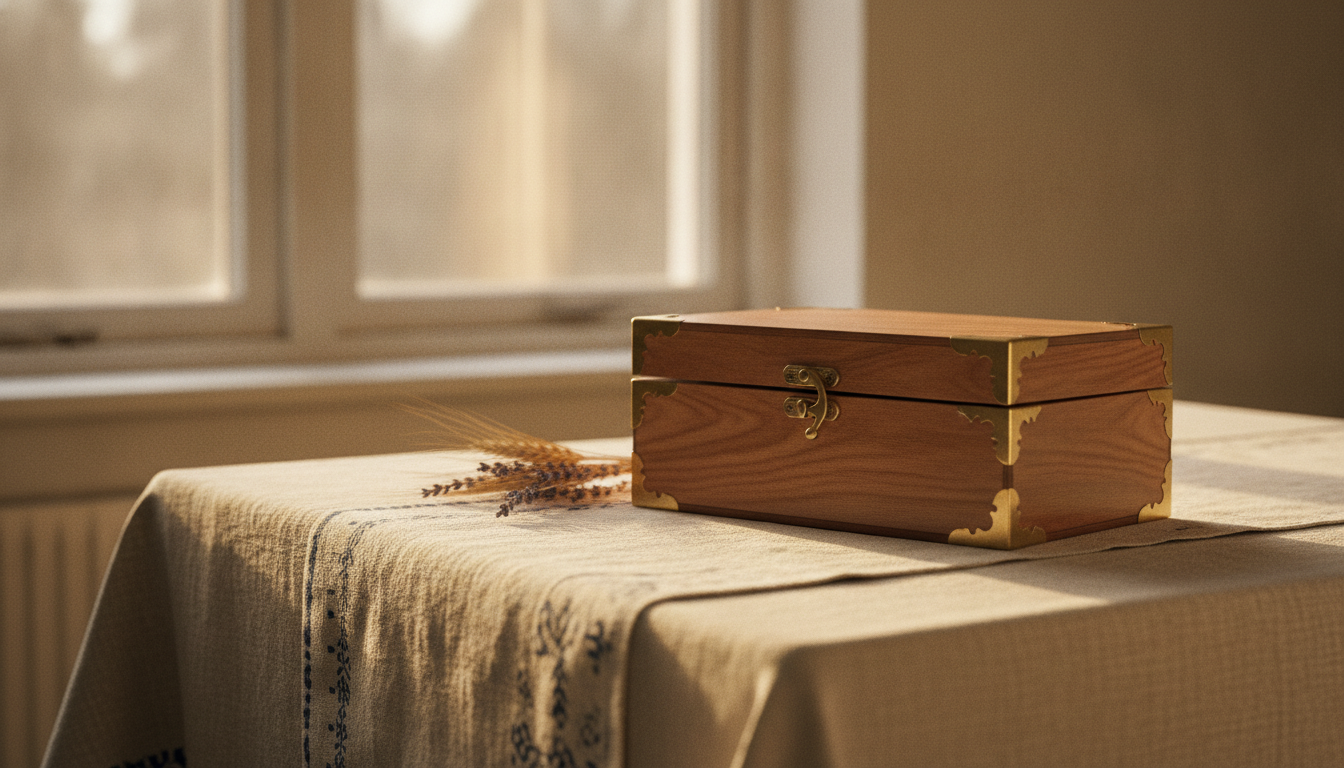
When you are working on old wounds, or going through a difficult period, memories, emotions or images sometimes rise to the surface, occasionally with great force. You can then feel invaded, overwhelmed, as if everything that was buried wanted to come out at once.
The container exercise helps you regain control. It involves acknowledging what is coming back and setting it aside temporarily, to return to it later, at the right time and in better conditions. As if you were saying to whatever is overflowing: "I see you. You are here. But now is not the moment. I will come back to you."
In brief, for everyone
The container is an imagination exercise: you picture a sturdy receptacle, place in it whatever is weighing on you, then close it. It helps you catch your breath when everything is overflowing. It is a pause: you come back to what you stored later, ideally with a therapist.
1. What is the container for?
In EMDR and in trauma therapies, the container is a stabilisation exercise. It is used before or during treatment to help the client manage overwhelming emotions or memories. It is also often used to close an incomplete session: whatever could not be processed is "put away" until the next session.
It is distinct from the safe place. The safe place is an inner space where you recharge; the container is a receptacle where you put whatever is overflowing. The two exercises complement each other.
- It strengthens your sense of control: you decide what you put away, and when you open it.
- It can help you stay afloat between sessions or during a demanding period.
- It prepares the ground for calmer therapeutic work, by allowing you to approach difficult memories at a pace you choose.
2. The exercise, step by step
You already know how to create mental images
Think back to the last time you read a novel. As the pages turned, the words stopped being words: they became places, faces, scenes. You "saw" the hero's house, the light in a street, a character's expression. Effortlessly, your brain turns language into images.
It is exactly this natural ability that the container exercise draws on. There is nothing to learn: you already know how to do it.
And what if no images come? That is entirely possible, and it has a name: aphantasia. Named and described in 2015 by the British neurologist Adam Zeman (Zeman et al., 2015), it refers to very weak or even absent mental imagery. It is thought to affect around 4% of the population (Dance et al., 2022). It is simply another way of thinking, neither a disorder nor a flaw: people with aphantasia represent things through sensations, words or ideas rather than images. If this applies to you, the exercise works too. You can feel the weight of the container, describe it aloud, or even draw it on a sheet of paper.
Imagine a sturdy, closed and secure container
It can take any form you like: a safe, a padlocked box, a locked suitcase, a large wooden or metal chest, a room with a reinforced door, a floating bubble, or even a magical object.
What matters is that this container is strong, sealed and under your control. Only you can open or close it.
Identify what you want to put in it, for now
Take a moment to identify what is weighing on you: an emotion that is too strong, an intrusive memory, an unpleasant image, a worry or a thought going round in circles.
There is no need to analyse or understand it right now. Simply tell yourself:
"I recognise that you are here, and I am going to set you aside for now."
Place this content in the container, then close it
Imagine taking this material and placing it in your container. It might take the shape of a ball of dark energy, a pile of papers, an image, a word, a sound, or simply a shapeless weight.
Then close the container, symbolically: by turning a key, locking a padlock, burying it or storing it somewhere out of reach. Then gently repeat to yourself:
"I will come back to this when I am ready, in better conditions. For now, I am setting it aside."
Notice the effect in your body
Take a moment to notice what changes: perhaps a little more space, a little less tension, freer breathing. Even if it is subtle, even if it is not magic, give yourself this moment.
Good to know
You can reuse your container as often as you need, and improve it over time: strengthen it, decorate it, make it more practical. Its purpose is to regulate what you are ready to face right now.
A sentence to tell yourself after the exercise:
"I can move forward without carrying everything at once. What I have set aside is safe. I will find it again when I am ready."
3. What the research says
The container is widely used in clinical practice, but to our knowledge, it has not been evaluated as such in controlled trials. It belongs to the family of stabilisation exercises, whose value is currently debated (see our article "Do we really need to stabilise before treating trauma?"). Two areas of research nonetheless shed light on its principle.
Why acknowledge rather than suppress
In a now-famous experiment, Daniel Wegner asked participants not to think about a white bear. The result: the thought came back more often afterwards. This is the rebound effect of thought suppression (Wegner et al., 1987). Trying to force a thought away tends to strengthen it. The container works differently: it acknowledges what is there and sets it aside deliberately, with the intention of coming back to it.
Postponing works
In cognitive behavioural therapy, scheduled worry postponement involves acknowledging a worry, writing it down, then deferring it to a set time of day. This technique reduces the time spent worrying (Borkovec et al., 1983) and, in a more recent study, anxiety and sleep problems (McGowan & Behar, 2013). The container rests on a similar logic: deferring while still acknowledging.
A meta-analysis of controlled studies confirmed that the rebound effect described by Wegner exists, with a small to moderate magnitude: trying to suppress a thought makes it return somewhat more afterwards, especially once the effort is relaxed (Abramowitz et al., 2001). Other work shows that stepping back from a painful experience, looking at it "from further away", makes it possible to think about it again with less distress and less rumination (Kross and Ayduk, 2011). The container combines these two principles: rather than pushing away, it puts at a distance.
4. The container in EMDR therapy
In EMDR, the container has two main uses:
- During preparation, it gives the client a way to regulate what surfaces between sessions, alongside the safe place.
- When closing an incomplete session, it allows whatever could not be reprocessed to be "put away", so that the session ends in a stable state. The therapist then explains that the work will resume at the next session (Shapiro, 2018).
In both cases, the container remains a transitional tool. It makes work on memories possible and prepares the way for it. To place these exercises within the current debate, see our article Do we really need to stabilise before treating trauma?
5. Common mistakes
- A container that is too flimsy: a cardboard box, an open bag. The container needs to be solid and closed, otherwise the contents "come back out". You can strengthen it as much as you like.
- Fighting what comes back: if an image resurfaces, calmly put it back, without judging yourself. Repetition is part of learning.
- Never reopening it: a container that is filled but never revisited becomes a form of avoidance. What is stored in it needs to be taken up again, ideally with a therapist.
- Using it in place of safety: in a situation of current danger, the container is not enough. The priority is to get to safety and ask for help.
6. When to ask for help
If emotions remain overwhelming despite the exercise, if traumatic memories often force their way in, or if you feel you constantly have to "put everything away" just to keep going, talk to a health professional. The container is a tool for catching your breath; what hurts is then worked through, with support. If distress becomes too intense or you are having suicidal thoughts, contact a crisis line: 988 (US/Canada), Samaritans 116 123 (UK and Ireland), or find a local helpline at findahelpline.com. In France: 3114. If you are in immediate danger, call your local emergency number (999 in the UK, 911 in North America, 112 in the EU).
Download the exercise sheet
Find the container exercise as a PDF (in French), to print or keep on your phone, so you can practise it on your own or with your therapist.
Download the sheet (PDF, in French)Clinical vignette
A fictional case, composed from common clinical situations.
Camille, 39, is having EMDR therapy after a road accident. At the end of a session, reprocessing is not complete: the image of the impact is still at 5 out of 10. The therapist suggests the container. Camille imagines a metal trunk, closed with two padlocks, which she stores at the back of a garage. She places in it the image and the sound of crumpling metal, closes the padlocks, then notices her shoulders relaxing: disturbance at 2 out of 10.
During the week, the image comes back twice while she is driving. Camille puts it back in the trunk and carries on. At the next session, the therapist "reopens" the container with her, and reprocessing resumes where it had left off.
Frequently asked questions
What if what I put away comes out anyway?
This is common, especially at first. Calmly put it back, without judging yourself, and strengthen your container if needed. If it happens very often, talk to your therapist about it.
How long can things stay in the container?
As long as it takes to find a suitable time and setting. The container is a temporary store: what is put away in it is meant to be taken up again.
Can the exercise be offered to a child?
Yes, with some adaptation: drawing or making a real box, choosing a concrete object, using simple words. With a child, the exercise is best done with the support of an adult or a professional.
In one sentence
The container lets you set aside what is overflowing, while still acknowledging it, so you can return to it at the right time.
It is a simple, gentle regulation tool. Its own effectiveness has not been measured, but it draws on well-studied principles: letting thoughts be rather than fighting them, and knowing how to defer.
References
- Wegner, D. M., Schneider, D. J., Carter, S. R. and White, T. L. (1987). Paradoxical effects of thought suppression. Journal of Personality and Social Psychology, 53(1), 5-13. Link.
- Borkovec, T. D., Wilkinson, L., Folensbee, R. and Lerman, C. (1983). Stimulus control applications to the treatment of worry. Behaviour Research and Therapy, 21(3), 247-251. Link.
- McGowan, S. K. and Behar, E. (2013). A preliminary investigation of stimulus control training for worry: Effects on anxiety and insomnia. Behavior Modification, 37(1), 90-112. Link.
- Zeman, A., Dewar, M. and Della Sala, S. (2015). Lives without imagery – Congenital aphantasia. Cortex, 73, 378-380. Link.
- Dance, C. J., Ipser, A. and Simner, J. (2022). The prevalence of aphantasia (imagery weakness) in the general population. Consciousness and Cognition, 97, 103243. Link.
- Abramowitz, J. S., Tolin, D. F., & Street, G. P. (2001). Paradoxical effects of thought suppression: A meta-analysis of controlled studies. Clinical Psychology Review, 21(5), 683-703. Link
- Kross, E., & Ayduk, O. (2011). Making meaning out of negative experiences by self-distancing. Current Directions in Psychological Science, 20(3), 187-191. Link
- Shapiro, F. (2018). Eye Movement Desensitization and Reprocessing (EMDR) Therapy: Basic Principles, Protocols, and Procedures (3rd ed.). New York: Guilford Press.
This article summarises the scientific evidence available at the date of publication. It is no substitute for clinical training, supervision, or the advice of a health professional.